The man on the street, talking into a brick
My father worked in IT, so he had a mobile phone long before anyone else we knew – a green one, on the E-Plus network. I only know this story because he still loves to tell it: how embarrassed his little daughter was whenever he talked into that phone on the street. People stared. Talking to a device in public looked odd, almost rude.
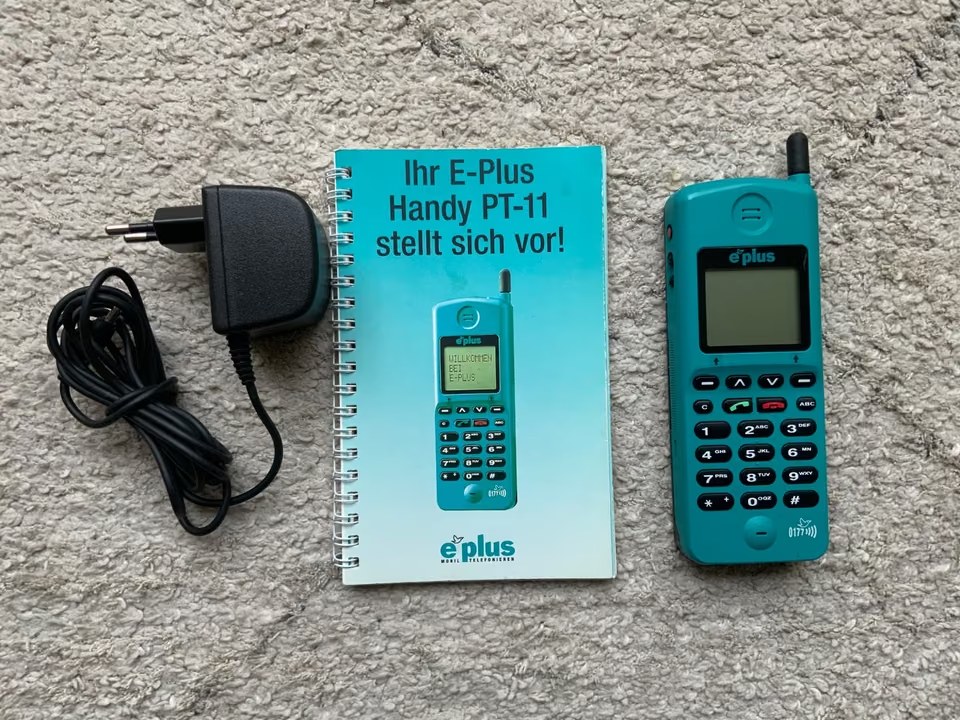
An E-Plus PT-11, like my father’s. Today a cult object, on sale for 25 euros. Photo: eBay Kleinanzeigen.
Today nobody looks up. We talk to our phones, our cars, our kitchens. I have seen that change from the inside: for years I worked on making it feel normal to talk to a machine, and I have followed it closely ever since.
A finished technology without a reason to exist
From 2014 on, I worked at 72andSunny Amsterdam on Talk to Google, Google’s push to bring voice search in the Google app into everyday life in Europe – for the UK, Germany and France. The technology was ready and the launch date set. What nobody could quite say was why a normal person would want to talk to their phone.
That was the real brief: find the moments in which speaking is simply better than typing. And we started with very little budget.
Marketing as product discovery
So we went looking for use cases, together with Google’s marketing team. Our briefs read like early product research. One food brief listed four needs: counting calories on the go, finding delivery nearby, getting recipes into the kitchen, sharing a shopping list. The scripts followed from there:
- Two friends stare at a whole salmon. “OK Google, how many calories does salmon have?” 208. “OK Google, show me how to fillet a fish.” Nobody wants to start.
- An empty fridge, a sofa, a closed supermarket. Three people, one question: “Show me a Thai delivery service that’s open.”
- A Jamie Oliver risotto, a German kitchen: “How many grams is one pound?” 453.
- Hands covered in dough – the moment typing is simply impossible.
We also sourced real clips from users and paired them with the question they made you want to ask: a squirrel, a leaf blower, a fit of anger. One of them we even shot ourselves, in the garden of 72andSunny, with a colleague. I won’t say which. And when an idea fit but the app could not answer yet, the query went to product as a ticket, and the answer was built. Marketing helped decide what the technology was for.
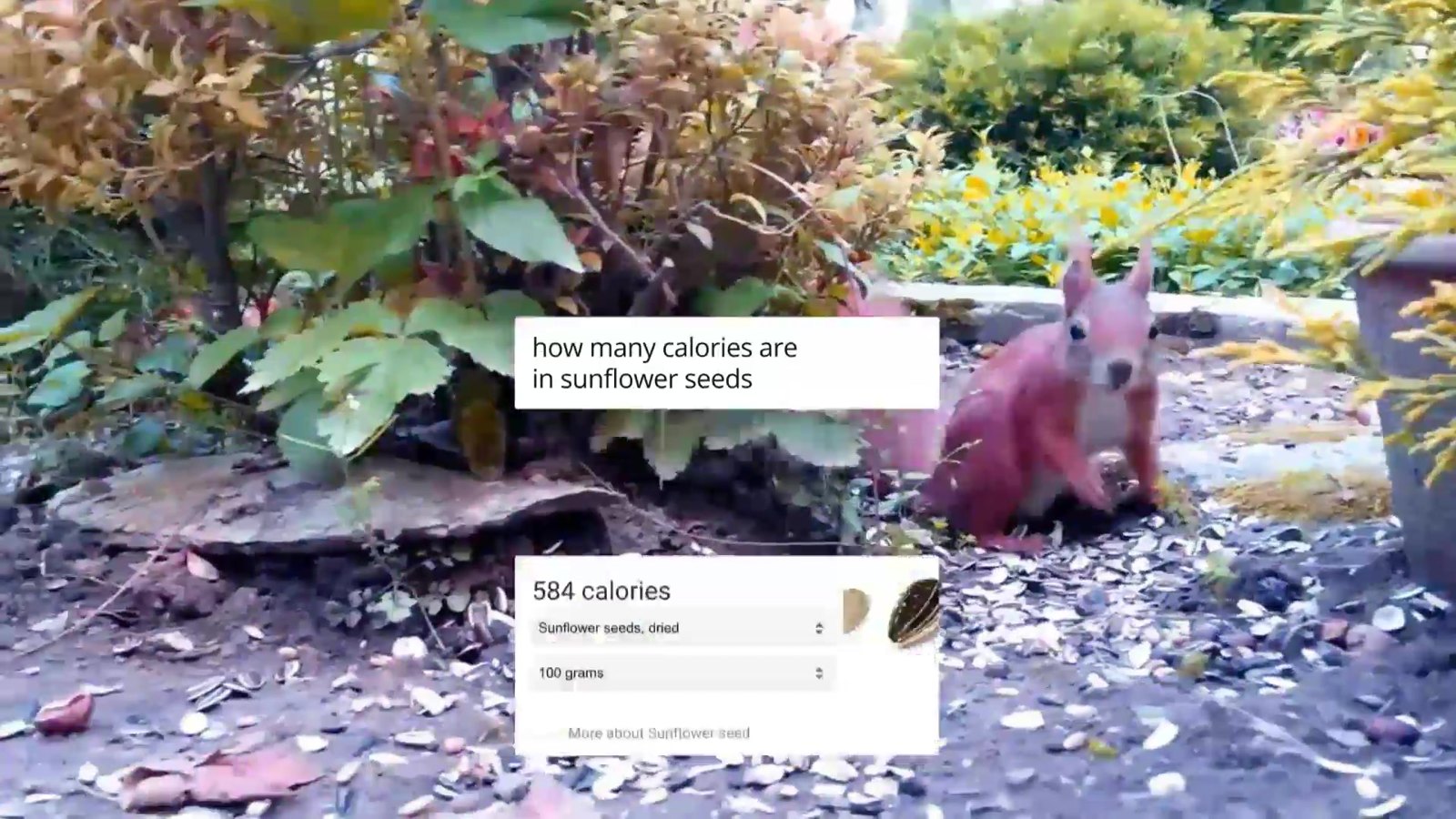
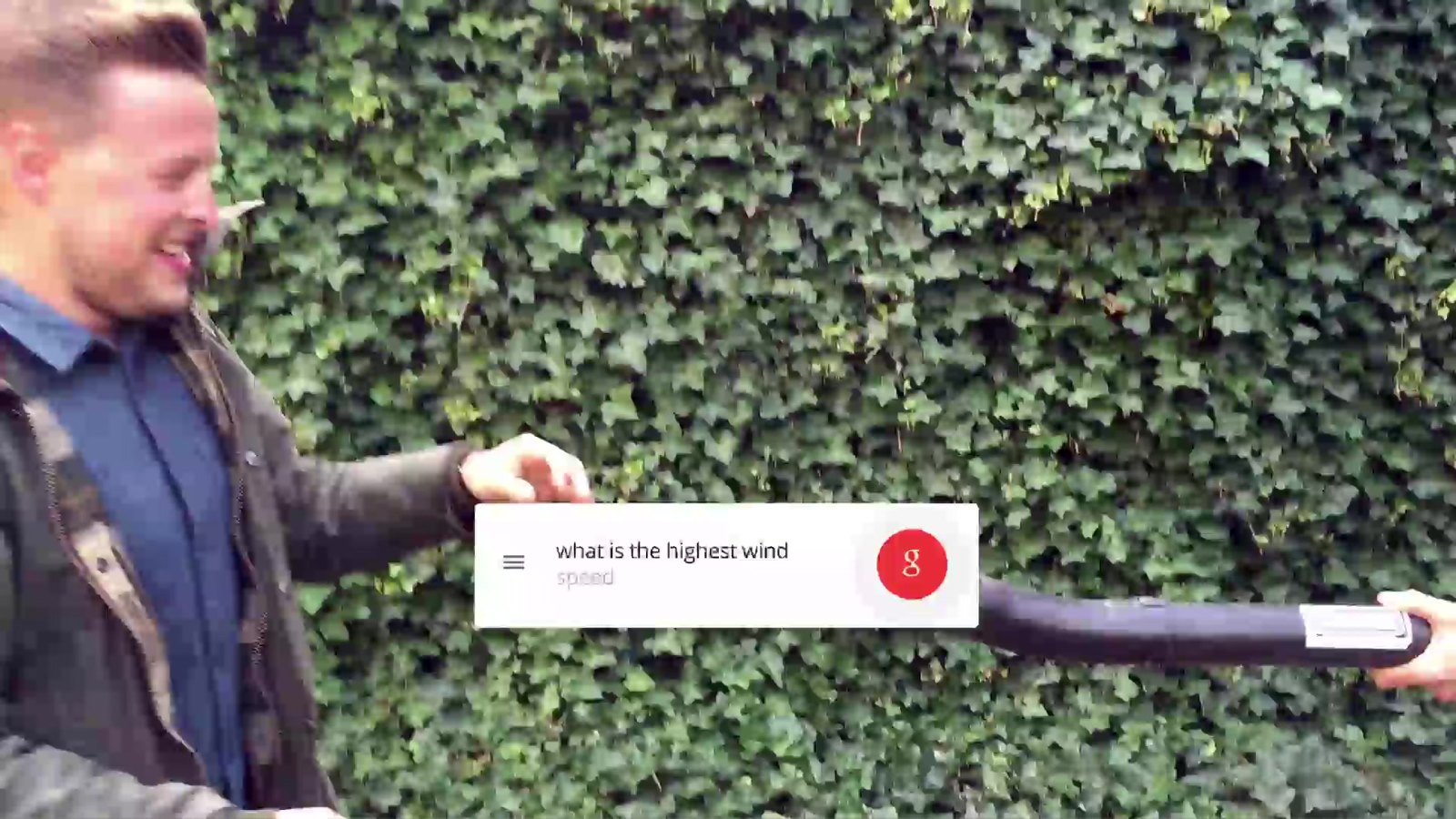
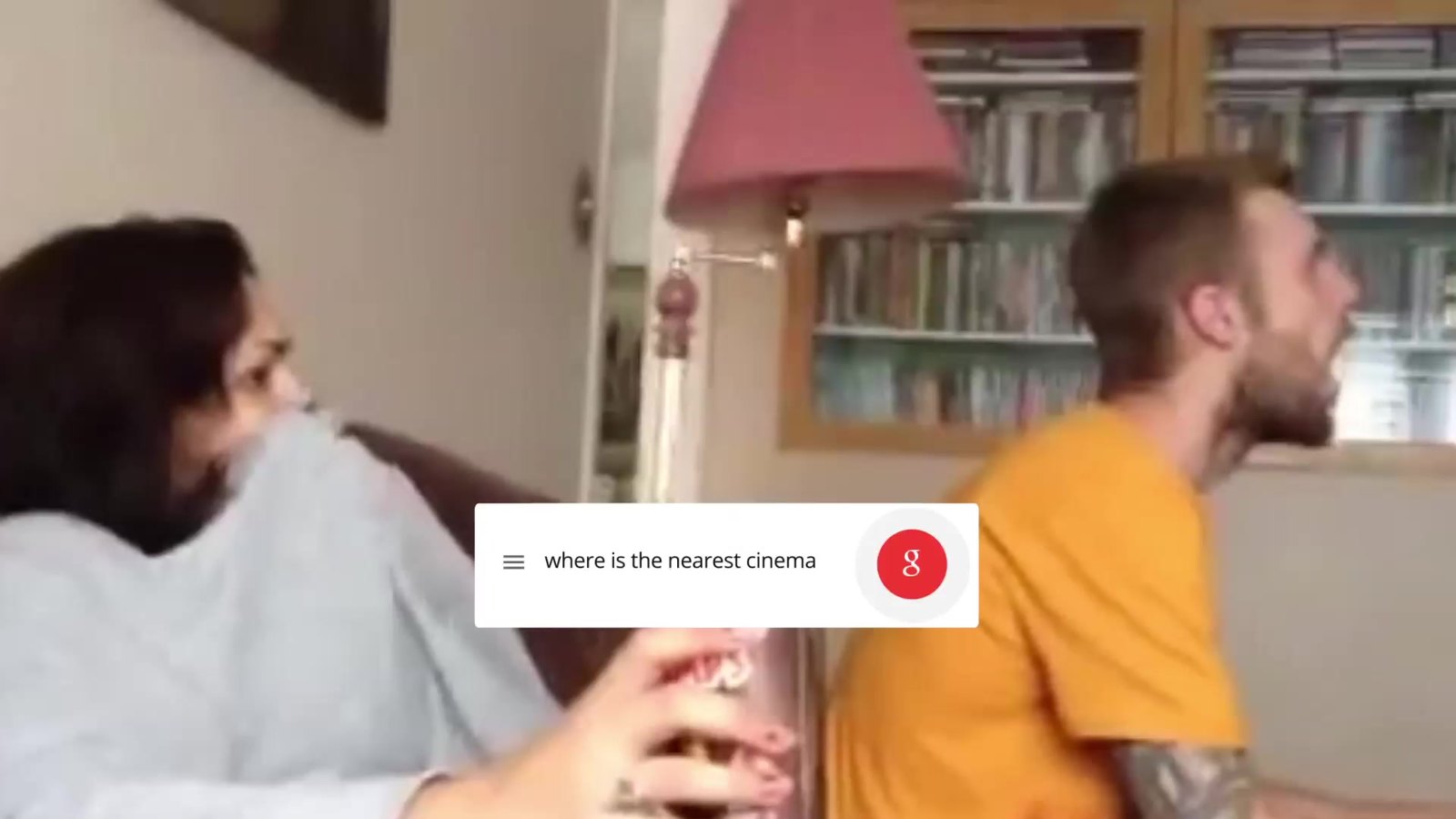
Talk to Google, 72andSunny Amsterdam, 2015.
It felt strange – even to us
Testing was part of the job, so we said “OK Google” into our phones all day. I remember how foreign it felt. Often there was simply no answer – the technology was far from finished, which is why so many of our ideas ended up as tickets for the product team. But the stranger part was the act itself: speaking to an object, out loud, in an open-plan office.
Part of it was the ritual. Every request had to start with an activation phrase: “OK Google”. You could not simply ask – you first had to address the machine, like knocking before you enter.
And I thought of my father’s story. Twenty years had passed between his phone call and my campaign, and still we were back at the same threshold: a new way of talking that first has to stop feeling embarrassing. Our job was less to explain a feature than to make a gesture feel normal.
During the research I also learned what actually makes a habit. Using something often is not enough. It has to be repeated in the same situation, set off by the same cue, until it runs on its own. A study at University College London found that this takes 66 days on average, with a range from 18 to 254 (Lally et al., 2010). Seen that way, “OK Google” was the cue, and the kitchen or the car could become the situation.
From the street into the living room
Not long after, voice moved home. Google Home arrived at the end of 2016, in Germany a year later. In hindsight that step makes a lot of sense: the safest place to practise a new behaviour is where nobody is watching. The kitchen, the sofa, the bedside table.
Fast forward: a website built by voice
This website was built by talking. I described what I wanted – the dots, the archive, the gallery that shuffles itself – and an AI wrote the code while I looked, corrected, and talked again. Ten years ago I said “OK Google” and felt silly. Today I speak whole design decisions into the room.
Recently a flyer came home from school: a typing course for children. There are not enough teachers, so it is taught remotely – a person behind a screen teaching a child behind another screen the ten-finger system, which is itself nothing more than an interface between humans and machines. That is a lot of interfaces for a skill that is already on its way out.
We learned to type because the keyboard was the only door into the machine, and we had to learn its language to get in. My children may never need that door. The machine is learning theirs.
What it taught me
First, every new interface has to cross a social threshold before it crosses a technical one. My father’s green phone on the street, my “OK Google” in the office, my voice building this site: the question was never only can it do this? but does it feel normal to ask?
Second, a technology is not finished when it works. It is finished when people know what it is for in their own lives. Right now we are all taking part in what may be the biggest experiment ever, while artificial intelligence and the companies behind it are still working out what it is worth.
I am sitting on my sofa, dictating this text to a machine. My children walk past and roll their eyes. I know that look. I gave it to my father thirty years ago.